



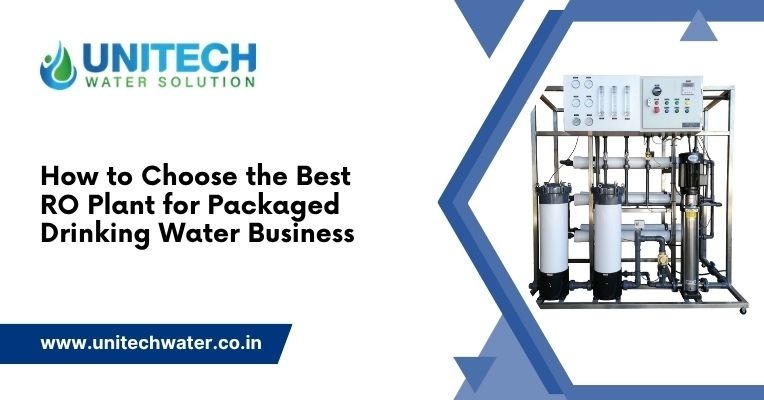
Starting a packaged drinking water business is one of the most scalable and profitable ventures in today’s market. With rising health awareness and increasing demand for safe drinking water, this industry continues to grow rapidly across India.
But here’s the truth:
Your success depends heavily on choosing the right RO plant.
If you make the wrong decision, you could face low output, compliance issues, and poor returns. If you choose correctly, you build a high-margin, scalable business.
This guide helps you understand everything, from capacity selection to BIS compliance and ROI.
This will help you choose the best RO plant for your packaged drinking water business.
Why Choosing the Right RO Plant Matters
A RO plant for packaged drinking water business is not just equipment—it’s the backbone of your operation.
It directly impacts:
- Water quality
- Production capacity
- Compliance with regulations
- Operational cost
- Profit margins
Investing in the wrong system can lead to:
- Frequent breakdowns
- Poor water quality
- Failure in BIS certification
- Loss of customers
That’s why selecting the right water purification plant is a strategic business decision—not just a technical one.
Understanding What an RO Plant Does
Before choosing, you must understand how a RO plant works.
Reverse Osmosis (RO) technology removes:
- Dissolved salts
- Heavy metals
- Bacteria & viruses
- Chemicals & contaminants
In a packaged drinking water plant, RO systems are combined with:
- Pre-filtration units
- UV/UF treatment
- Ozonation
- Mineral dosing
This ensures water is safe, clean, and compliant with BIS standards.
Step 1: Selecting the Right RO Plant Capacity
Capacity is one of the most critical factors.
Choosing the wrong capacity can either:
- Limit your production
- Increase unnecessary costs
What is RO Plant Capacity?
It refers to the amount of water purified per hour, usually measured in:
- LPH (Litres Per Hour)
Common Capacity Ranges
Business Size Capacity Small Scale 250–500 LPH Medium Scale 500–2000 LPH Large Scale 2000–10,000+ LPH
How to Decide the Right Capacity
When determining RO plant capacity for mineral water plant, consider:
1. Target Market Demand
- Estimate how much water you plan to sell daily.
2. Packaging Type
- 20L jars → High volume
- Bottles → Higher margins
3. Future Expansion
- Always choose a slightly higher capacity than your current requirement.
4. Working Hours
- If you run 8 hours vs 24 hours, capacity requirements change significantly.
Pro Tip:
A scalable commercial RO plant is always a smarter investment than a basic one.
Step 2: BIS Compliance – Non-Negotiable for Your Business
- If you are serious about running a legal and trusted business, BIS certification is mandatory.
What is BIS?
- Bureau of Indian Standards (BIS) regulates packaged drinking water under:
- IS 14543 (Packaged Drinking Water)
- IS 13428 (Natural Mineral Water)
Why BIS Certification is Important
Without it, you cannot:
- Legally sell packaged drinking water
- Supply to retailers or distributors
- Build brand trust
Key Requirements for BIS Approval
To qualify, your BIS certified RO plant for drinking water must include:
- Multi-stage filtration
- UV/ozonation system
- Food-grade pipelines
- Stainless steel tanks
- Microbiological testing setup
Plant Layout Matters
BIS also checks:
- Plant hygiene
- Workflow design
- Separation of raw & treated water
Choosing the Right System:
Always invest in a BIS certified water plant designed specifically for compliance.
Working with an experienced provider like Unitech Water ensures your plant meets BIS guidelines from day one. This saves time, money, and avoids approval delays.
Step 3: Understanding ROI (Return on Investment)
Your goal is not just to set up a plant—but to make it profitable.
What Determines ROI?
ROI in a mineral water plant depends on:
- Initial investment
- Operational cost
- Selling price
- Daily output
- Market demand
Cost Breakdown
Initial Investment Includes:
- RO plant setup
- Bottling & packaging unit
- BIS certification
- Infrastructure
Operational Costs Include:
- Electricity
- Labor
- Maintenance
- Packaging materials
ROI Timeline
Most businesses recover their investment in:
- 12 to 24 months
With proper planning, this can be even faster.
Step 4: Key Features to Look for in an RO Plant
Not all RO systems are created equal.
When selecting the best RO plant for packaged drinking water, look for:
1. High-Quality Membranes
Ensure better filtration and longer life.
2. Energy Efficiency
Reduces operational cost.
3. Automation
Modern commercial RO plant systems come with automated controls.
4. Durable Material
Prefer stainless steel (SS 304/316).
5. Easy Maintenance
Avoid complex systems that increase downtime.
6. After-Sales Support
Critical for long-term performance.
Step 5: Raw Water Quality Analysis
Before selecting any water purification plant, test your raw water.
Why It Matters
Different water sources require different treatment methods.
- Borewell → High TDS
- River → Biological contamination
- Municipal → Chlorine
Based on this, your plant may require:
- Softener
- Iron removal system
- Activated carbon filter
Companies like Unitech Water provide customized solutions based on water analyzed—ensuring efficiency and compliance.
Step 6: Plant Design & Layout Planning
A well-designed packaged drinking water plant improves efficiency and compliance.
Key Design Elements
- Separate raw & treated water areas
- Hygienic bottling section
- Proper drainage
- Air-controlled filling area
A poor layout can lead to:
- Contamination
- BIS rejection
- Operational inefficiency
Step 7: Automation vs Manual Systems
Manual Systems
- Lower cost
- Higher labor dependency
Automated Systems
- Higher efficiency
- Consistent output
- Lower human error
For long-term growth, automated RO plants for packaged drinking water business is recommended.
Step 8: Maintenance & Operational Efficiency
Your plant is only as good as its maintenance.
Regular Maintenance Includes:
- Membrane cleaning
- Filter replacement
- Pump inspection
Ignoring maintenance can lead to:
- Poor water quality
- Increased cost
- System failure
Choosing a reliable partner like Unitech Water ensures proper AMC (Annual Maintenance Contracts) and ongoing support.
Step 9: Choosing the Right Supplier
This is where most businesses fail.
A good supplier doesn’t just sell machines—they build your business foundation.
What to Look For
- Industry experience
- BIS knowledge
- Custom solutions
- Installation support
- After-sales service
Why Choose Unitech Water?
Unitech Water stands out because:
- They offer end-to-end solutions
- Expertise in BIS compliance
- Customized plant design
- Strong after-sales support
This ensures your RO plant runs smoothly from day one.
Step 10: Scaling Your Business
Once your plant is operational, focus on scaling.
Growth Strategies
- Expand distribution network
- Add bottle sizes
- Introduce branding
- Upgrade capacity
A well-chosen commercial RO plant makes scaling easy and cost-effective.
Common Mistakes to Avoid
Avoid these mistakes when selecting your plant:
- Choosing low capacity to save cost
- Ignoring BIS compliance
- Not testing raw water
- Buying from inexperienced vendors
- Ignoring maintenance
These mistakes can cost you lakhs in the long run.
Final Checklist Before Buying an RO Plant
Before finalizing your decision, ensure:
- Capacity matches your demand
- BIS compliance is achievable
- ROI is calculated
- Supplier is reliable
- After-sales support is available
Conclusion
Choosing the best RO plant for packaged drinking water is not just a technical decision—it’s a business strategy.
When you focus on:
- Correct capacity
- BIS compliance
- Strong ROI
- Reliable supplier
You set yourself up for long-term success.
A trusted partner like Unitech Water can simplify this journey by providing tailored solutions, expert guidance, and end-to-end support.
If you’re planning to start or upgrade your packaged drinking water plant, now is the time to invest smartly and build a scalable, profitable business.
Frequently Asked Questions
For small-scale businesses, 250–500 LPH works well. Medium-scale needs 500–2000 LPH. Always choose slightly higher capacity than current demand to accommodate future growth.
Yes. BIS certification under IS 14543 is legally mandatory to sell packaged drinking water in India. Without it, you cannot supply to retailers, distributors, or build consumer trust.
Most packaged drinking water businesses recover their investment within 12 to 24 months, depending on daily output, local market demand, pricing strategy, and operational efficiency.
Look for high-quality membranes, energy efficiency, SS 304/316 construction, automation, easy maintenance, and strong after-sales support from an experienced, BIS-knowledgeable supplier.
Different water sources contain different contaminants. Testing helps identify the right treatment — softener, iron removal, or carbon filter — ensuring your plant performs efficiently and meets BIS standards.