


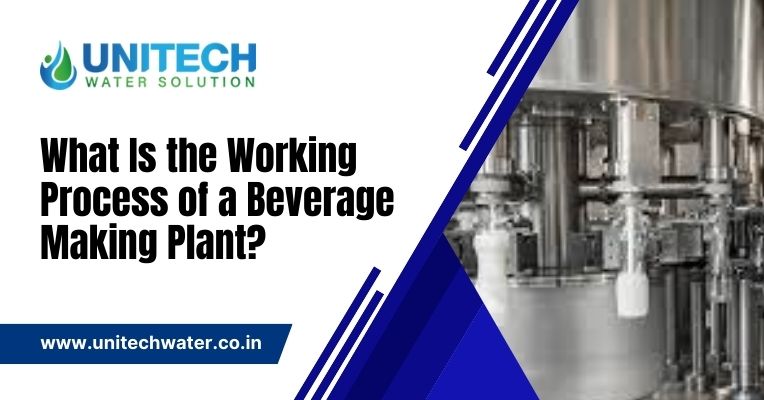
A beverage making plant plays a vital role in converting raw ingredients into safe, consistent, and ready-to-consume drinks. From water purification to final packaging, every stage is carefully designed to maintain quality, hygiene, and efficiency. Whether it is a soft drink, juice, or carbonated beverage, the production process follows a structured system supported by advanced equipment and automation.
In this blog, we will explain the complete working process of a beverage manufacturing plant, covering raw material handling, processing stages, and the role of modern beverage plant machinery.
Understanding a Beverage Manufacturing Plant
A beverage manufacturing plant is an industrial setup where drinks are produced in large quantities under controlled conditions. These plants are designed to handle various types of beverages, including still drinks, juices, and carbonated products. Each process step is aligned with food safety standards and quality regulations.
The plant layout usually includes water treatment systems, ingredient preparation units, blending and mixing tanks, carbonation units (if required), filling machines, and packaging lines. Proper integration of these systems ensures smooth production and consistent output.
Role of Water in a Beverage Making Plant
Water is the primary ingredient in most beverages, making its quality extremely important. In a beverage making plant, raw water is treated before it enters the production line. This is where industrial water treatment solutions become essential.
Treated water ensures:
- Removal of impurities and contaminants
- Consistent taste and clarity
- Compliance with food and beverage safety standards
Advanced filtration, reverse osmosis, and disinfection systems help maintain the required water quality for beverage production.
Step-by-Step Working Process of a Beverage Making Plant
1. Raw Water Treatment and Purification
The first step in any beverage manufacturing plant is water treatment. Raw water from various sources is processed through filtration systems to remove suspended particles, followed by purification stages to eliminate dissolved salts, microorganisms, and unwanted odors.
High-quality treated water forms the foundation for producing safe and consistent beverages.
2. Ingredient Preparation and Handling
Once the water is ready, other raw ingredients such as sugar, flavors, concentrates, and additives are prepared. These ingredients are stored in hygienic tanks and handled carefully to prevent contamination.
Accurate measurement and controlled handling ensure uniform taste and quality across batches.
3. Mixing and Blending Process
In this stage, water and ingredients are mixed in precise proportions. Automated mixing systems help maintain consistency and reduce manual errors. The blending process is critical, as it directly affects the final taste, color, and texture of the beverage.
Modern beverage plant machinery ensures uniform mixing while maintaining hygiene and efficiency.
4. Carbonation Process (For Carbonated Beverages)
For plants producing fizzy drinks, carbonation is a key step. In a carbonated beverage manufacturing plant, carbon dioxide is added under controlled pressure and temperature conditions.
This process creates the desired fizz and mouthfeel in soft drinks. Proper carbonation ensures product stability and enhances consumer experience.
5. Soft Drink Manufacturing Process
A soft drink manufacturing plant follows a structured production flow that includes syrup preparation, blending with treated water, carbonation (if required), and cooling. Each step is carefully monitored to maintain product quality and safety.
Automation plays a major role in ensuring speed, accuracy, and consistency throughout the soft drink manufacturing process.
6. Filtration and Quality Control Checks
Before filling, beverages often pass through final filtration to remove any remaining particles. Quality control checks are conducted at various stages to test parameters such as taste, carbonation level, clarity, and safety.
Regular testing helps maintain compliance with food-grade standards and ensures consumer safety.
7. Filling and Sealing Operations
The filling stage is where the beverage is transferred into bottles, cans, or containers. A carbonated soft drink filling plant uses specialized filling machines designed to handle pressurized liquids without losing carbonation.
Automated filling systems ensure:
- Accurate volume control
- Minimal spillage
- Hygienic sealing
This stage is crucial for maintaining shelf life and product freshness.
8. Packaging and Labeling
After filling and sealing, containers move to the packaging line. Labeling, batch coding, and packing are done using automated systems for speed and accuracy. Proper packaging protects the product during storage and transportation.
Efficient packaging also helps improve brand presentation and market readiness.
Importance of Beverage Plant Machinery
Modern beverage plant machinery improves productivity, reduces manual intervention, and enhances hygiene. From water treatment systems to filling and packaging units, each machine plays a specific role in ensuring smooth operations.
Advanced machinery also supports scalability, allowing manufacturers to increase production without compromising quality.
Benefits of a Well-Designed Beverage Making Plant
A properly designed beverage making plant offers several advantages:
- Consistent product quality
- Efficient use of water and resources
- Reduced operational downtime
- Improved hygiene and safety
- Scalable production capacity
These benefits help beverage manufacturers meet market demand while maintaining high standards.
Applications of Beverage Manufacturing Plants
Beverage manufacturing plants are used for producing:
- Soft drinks
- Carbonated beverages
- Flavored water
- Energy drinks
- Juice-based beverages
Each application may require slight variations in process design, but the core production principles remain the same.
Future Trends in Beverage Production
Automation, smart monitoring, and sustainable water management are shaping the future of beverage production. Energy-efficient systems and advanced treatment technologies are becoming essential for modern plants.
Companies like Unitech Water Solution support beverage manufacturers by providing reliable water and process solutions that improve efficiency and sustainability.
Conclusion
A beverage making plant is a complex yet well-organized system that transforms raw materials into high-quality drinks. From water treatment and ingredient preparation to carbonation, filling, and packaging, each step plays a vital role in the final product.
Understanding the working process of a beverage manufacturing plant helps businesses improve efficiency, ensure quality, and adopt better production practices. With the right technology and systems in place, beverage manufacturers can achieve consistent output and long-term operational success.
Frequently Asked Questions
A beverage making plant is an industrial facility where different types of drinks are produced using treated water, ingredients, and automated machinery under controlled conditions.
Water treatment ensures that the water used in beverages is clean, safe, and suitable for consumption, directly affecting taste and quality.
It is a plant designed to produce carbonated drinks by adding carbon dioxide to the beverage under controlled pressure and temperature.
It uses specialized filling machines to fill and seal carbonated beverages without losing carbonation or causing contamination.
Beverage plant machinery improves production efficiency, maintains hygiene, reduces errors, and ensures consistent product quality.