



Access to clean and safe drinking water has become a serious concern today. Due to increasing pollution, industrial discharge, and poor water sources, untreated water is no longer safe for direct use. This is why RO (Reverse Osmosis) water purification systems are now commonly used in homes, offices, hospitals, factories, and packaged drinking water plants.
An RO system may look simple from the outside, but it depends on several internal components to work properly. One such component that plays a very important role but often gets ignored is the cartridge filter.
Cartridge filters help protect the RO system, improve water quality, and keep the system running smoothly for a long time. Without cartridge filters, RO membranes can get damaged quickly, leading to poor water output and higher maintenance costs.
In this guide by Unitech Water Solutions, we explain in clear and easy language why cartridge filters are so important in RO water purification systems, how they work, their types, benefits, and how they improve overall system performance.
What Is a Cartridge Filter?
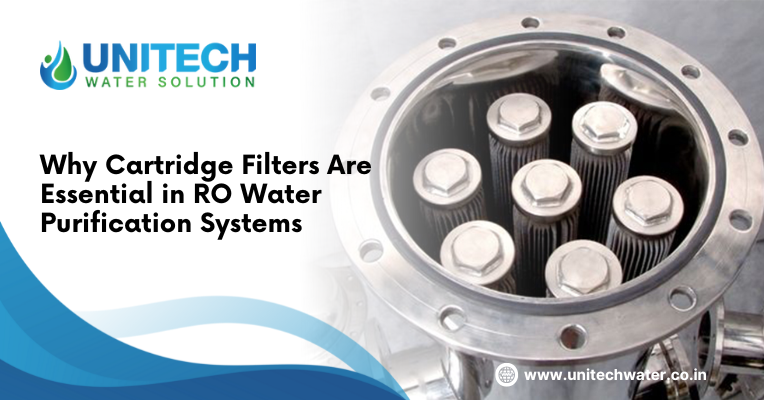
A cartridge filter is a simple cylindrical water filter designed to remove solid impurities from water. These impurities usually include:
- Sand
- Dust
- Mud
- Rust particles
- Silt
- Other suspended particles
The cartridge filter is installed inside a filter housing and is placed before the RO membrane. This position allows it to clean the water before it enters the most sensitive part of the RO system.
By doing this, cartridge filters ensure that only cleaner water reaches the RO membrane, which helps the entire purification system work efficiently.
Why Cartridge Filters Are Needed in RO Systems
RO systems work in multiple steps. Each step is designed to remove a specific type of impurity. Before water reaches the RO membrane, it must be free from physical dirt and particles. Cartridge filters handle this job.
Key Functions of Cartridge Filters in RO Systems
- Remove solid particles from water
- Reduce water cloudiness
- Prevent membrane blockage
- Maintain proper water pressure
- Increase membrane lifespan
- Improve overall purification efficiency
If cartridge filters are not used, small particles can enter the membrane and reduce water flow or damage it permanently.
Major Reasons Cartridge Filters Are Essential for RO Water Purification
1. They Protect Expensive RO Membranes
RO membranes are one of the costliest parts of an RO system. They are very sensitive and can easily get damaged by dirt or sand particles.
Cartridge filters act as a protective barrier, stopping these particles before they reach the membrane. This helps prevent:
- Membrane clogging
- Surface damage
- Early membrane failure
2. They Improve RO System Performance
When water entering the RO membrane is already clean, the system works better. Cartridge filters help maintain:
- Smooth water flow
- Balanced pressure
- Consistent purification results
As a result, the RO membrane removes contaminants more effectively and delivers better-quality water.
3. They Reduce Maintenance and Operating Costs
Without cartridge filters, RO membranes need frequent cleaning or replacement. This increases maintenance expenses.
Using cartridge filters helps reduce:
- Cleaning frequency
- Chemical usage
- System downtime
- Replacement costs
This makes the RO system more economical over time.
4. They Improve Final Water Quality
Cartridge filters remove fine sediments that affect water clarity and taste. This results in:
- Clear-looking water
- Better taste
- Safer drinking water
Common Types of Cartridge Filters Used in RO Systems
Different RO systems require different cartridge filters based on water quality and application.
Micron Cartridge Filters
Micron cartridge filters are classified by their micron rating, which shows the size of particles they can block.
Common micron ratings include:
- 1 micron
- 5 micron
- 10 micron
- 20 micron
A lower micron rating means finer filtration. These filters are widely used in RO pre-treatment systems.
Sediment Cartridge Filters
Sediment filters are designed to remove:
- Sand
- Dust
- Rust
- Mud
- Suspended solids
They are usually the first cartridge filter installed in an RO system.
Activated Carbon Cartridge Filters
Activated carbon cartridges remove chemical impurities such as:
- Chlorine
- Unpleasant taste
- Bad odor
- Organic contaminants
Removing chlorine is very important because it can damage RO membranes.
Pleated Cartridge Filters
Pleated cartridge filters have a folded design that provides:
- Larger surface area
- Higher water flow
- Longer service life
These filters are commonly used in commercial and industrial RO systems.
Why Choosing the Right Micron Rating Is Important
Selecting the correct micron size is essential for proper filtration.
Simple Micron Selection Tips
- Dirty or muddy water → 1–5 micron filters
- Clear water → 10–20 micron filters
- Wrong micron choice → Pressure drop or poor filtration
Unitech Water Solutions helps customers choose the right micron cartridge filter based on water quality analysis.
Cartridge Filters in Modern Water Purification Systems
Cartridge filters are a key part of today’s water purification filters. They make sure that RO membranes receive clean input water, which improves system life and performance.
They are commonly used in:
- Home RO purifiers
- Commercial water purification systems
- Industrial RO plants
- Packaged drinking water units
- Food and pharmaceutical industries
Role of Cartridge Filters in RO Pre-Treatment
A standard RO pre-treatment system includes:
- Sand filter
- Carbon filter
- Cartridge filter
Among these, cartridge filters provide the final fine filtration step. They capture particles that other filters may miss.
Cartridge Filters vs Other Filtration Options
Cartridge Filters vs Sand Filters
- Sand filters remove large particles
- Cartridge filters remove fine particles
- Cartridge filters offer micron-level accuracy
Cartridge Filters vs Bag Filters
- Bag filters handle high flow
- Cartridge filters offer better filtration precision
- Cartridge filters are easier to maintain
Benefits of Cartridge Filters in Industrial RO Systems
Industrial RO plants require stable and consistent water quality. Cartridge filters help by providing:
- Reliable system operation
- Longer membrane life
- Reduced downtime
- Consistent water output
- Easy replacement
Industries like power plants, textiles, food processing, and pharmaceuticals rely heavily on cartridge filtration.
Common RO Problems Solved by Cartridge Filters
Cartridge filters help prevent:
- Membrane fouling
- Pressure loss
- Frequent membrane replacement
- Cloudy water
- Poor system efficiency
When Should Cartridge Filters Be Changed?
Cartridge filters should be replaced regularly for best performance.
Signs You Need Replacement
- Reduced water pressure
- Lower flow rate
- Visible dirt on filter
- Change in water taste or clarity
On average, filters should be replaced every 3 to 6 months, depending on water quality and usage.
How to Select the Right Cartridge Filter
Before choosing a cartridge filter, consider:
- Raw water condition
- Required micron size
- RO system capacity
- Application type
- Filter housing compatibility
Unitech Water Solutions offers expert support to help customers make the right choice.
Why Choose Unitech Water Solutions?
Unitech Water Solutions is a trusted water treatment solutions provider with years of industry experience.
What Makes Unitech Water Solutions Reliable
- Wide range of cartridge filters
- High-quality filtration materials
- Solutions for domestic and industrial RO systems
- Technical expertise and support
- Proven performance in real applications
Where Cartridge Filters Are Used
Cartridge filters are used in:
- RO water purification systems
- Bottled drinking water plants
- Industrial process water
- Boiler feed systems
- Cooling towers
- Food and beverage production
Environmental and Cost Advantages
Cartridge filters help improve RO efficiency, which reduces:
- Water wastage
- Energy consumption
- Operating costs
This supports sustainable and eco-friendly water purification.
Future Scope of Cartridge Filters
As water quality standards become stricter, cartridge filters will remain a key part of advanced water treatment systems. New filter designs and materials will further improve performance and durability.
Conclusion
Cartridge filters are a must-have component in RO water purification systems. They protect RO membranes, improve water quality, reduce maintenance costs, and increase system lifespan.
By choosing the right cartridge filters and working with experienced providers like Unitech Water Solutions, you can ensure reliable performance and clean water for long-term use.
Frequently Asked Questions
They remove solid particles and protect RO membranes from damage.
Most systems use 1 or 5 micron filters, depending on water quality.
Usually every 3–6 months.
Yes, they provide finer filtration than sand filters.
Yes, they offer cartridge filters for domestic, commercial, and industrial RO systems.