



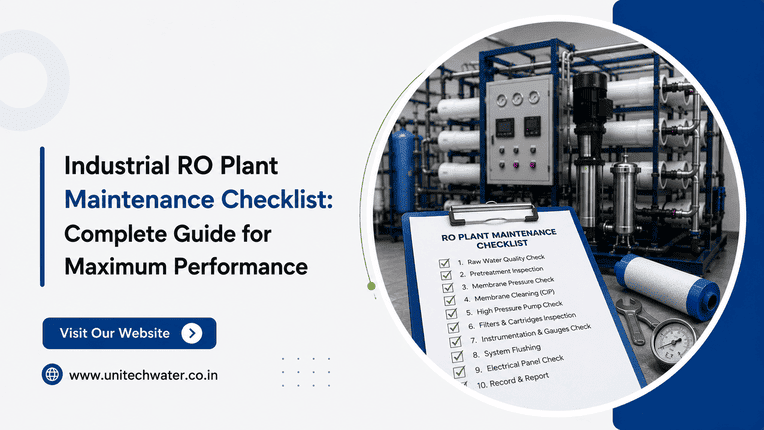
Maintaining an industrial RO plant is not just about fixing problems when they arise it is about preventing them before they cost you time, money, and productivity. Whether you run a manufacturing unit, a pharmaceutical facility, or a food processing plant, consistent industrial RO plant maintenance is the backbone of reliable water quality and system longevity.
This complete guide walks you through everything you need to know from daily checks to annual servicing so your reverse osmosis system keeps performing at its peak.
Why Industrial RO Plant Maintenance Matters
An RO plant works under continuous pressure, filtering out dissolved salts, heavy metals, bacteria, and other contaminants from feed water. Over time, membranes foul, filters clog, and seals wear out. Without a structured maintenance routine, even the most advanced system from a reputable industrial RO plant manufacturer will underperform or fail prematurely.
The consequences of neglected maintenance include:
- Declining water output and quality
- Increased energy consumption
- Shortened membrane life
- Unexpected downtime and costly repairs
A proactive approach to maintenance not only extends equipment life but also protects your operational continuity.
Daily Maintenance Checklist
Daily checks take very little time but catch problems early. Your operators should monitor and record the following every day:
- Check Operating Pressure
Monitor the feed, permeate, and reject pressure readings. Any sudden spike or drop can indicate membrane fouling or a pump issue. - Monitor Flow Rates
Compare permeate and reject flow rates with baseline values. A significant drop in permeate flow is often the first sign of membrane scaling or fouling. - Inspect for Leaks
Visually inspect all pipe fittings, connectors, and pressure vessels for drips or moisture buildup. - Check TDS Levels
Use a TDS meter to verify that output water quality is within the acceptable range. Rising TDS in the permeate indicates declining membrane performance.
- Verify Chemical Dosing Systems
Ensure antiscalant and pH adjustment chemicals are dosing at the correct rates. Running out of antiscalant is one of the most common causes of membrane scaling.
Weekly Maintenance Checklist
- Inspect Pre-Filters and Cartridge Filters
Check pressure drop across pre-filters. A differential pressure above the recommended limit means it is time for a replacement. - Clean Strainers
Flush and clean the feed water strainer to prevent debris from reaching the membranes. - Check Pump Performance
Listen for unusual noises from the high-pressure pump and verify that motor current draw is within normal range. - Inspect Control Panel and Sensors
Check all sensors, pressure gauges, and flow meters for accurate readings. Faulty sensors can lead to wrong operational decisions. - Log All Readings
Maintain a weekly performance log. Tracking trends in pressure, flow, and TDS over time is one of the most powerful tools for predictive maintenance.
Monthly Maintenance Checklist
- Test Feed Water Quality
Send a feed water sample for lab analysis monthly. Changes in source water chemistry such as increased iron, hardness, or biological load require adjustments to your pretreatment setup. - Inspect Membrane Vessels
Check O-rings and end caps on pressure vessels for signs of wear or leakage. - Calibrate Instruments
Calibrate TDS meters, pH sensors, flow meters, and pressure transmitters to ensure accuracy.
- Check Electrical Connections
Inspect all electrical terminals, motor connections, and control wiring for corrosion or loose connections. - Review Chemical Consumption
Compare actual chemical usage against expected consumption. A sudden increase may point to a water quality change or a dosing pump malfunction.
RO Membrane Cleaning Procedure
The membrane is the heart of any RO system. Following a proper RO membrane cleaning procedure is critical to restoring performance when fouling occurs.
Signs that membranes need cleaning:
- Permeate flow drops by 10–15% from baseline
- Salt rejection decreases noticeably
- Differential pressure across the system increases by 10–15%
Standard Cleaning Steps:
- Prepare cleaning solution and choose the right chemical based on the foulant type. Use a low-pH cleaner for mineral scaling and a high-pH cleaner for organic fouling or biofouling.
- Flush the system with permeate water to remove loose deposits.
- Circulate the cleaning solution at low pressure through the membrane vessels for 30–60 minutes.
- Soak the membranes for 1–8 hours depending on fouling severity.
- Flush again with clean permeate water to remove all traces of cleaning chemicals.
- Restart the system and monitor performance data to confirm recovery.
Always follow the membrane manufacturer's guidelines and consult your RO plant manufacturer if you are unsure about cleaning chemical compatibility.
Annual Maintenance Checklist
Once a year, a thorough inspection and servicing of the entire system is essential:
- Replace cartridge filter elements regardless of visual condition
- Inspect and replace worn pump seals, O-rings, and gaskets
- Perform a full membrane performance test and replace membranes if recovery is below acceptable levels
- Service the high-pressure pump as per manufacturer recommendations
- Inspect the storage tank and distribution lines for biofilm or scaling
- Review and update your Standard Operating Procedures (SOPs)
At Unitech Water Solution, annual maintenance packages are designed to cover all these critical touchpoints, ensuring your system runs without surprises throughout the year.
Common Mistakes to Avoid
Even experienced plant operators make maintenance mistakes. Here are the most common ones to watch out for:
- Skipping pre-filter replacements dirty pre-filters force membranes to work harder, shortening their life significantly
- Ignoring early warning signs a small TDS rise or slight pressure change is your system telling you something needs attention
- Using incompatible cleaning chemicals always verify chemical compatibility before running a cleaning cycle
- Neglecting the log book without historical data, it is nearly impossible to identify trends or diagnose problems accurately
- Delaying membrane cleaning the longer you wait, the harder and sometimes impossible it becomes to recover membrane performance
Build a Maintenance Culture, Not Just a Checklist
A checklist is only as good as the team following it. Train your operators regularly, hold monthly review meetings, and invest in digital monitoring tools where possible. Many modern systems from leading water treatment plant manufacturers now come with remote monitoring capabilities use them.
Partnering with Unitech Water Solution for periodic audits and technical support can further strengthen your maintenance program, giving you expert guidance whenever your system needs attention.
Frequently Asked Questions (FAQs)
Membranes should be cleaned when permeate flow drops by 10–15% or differential pressure increases by 10–15% from baseline typically every 3 to 6 months depending on feed water quality.
With consistent and correct maintenance, industrial RO membranes typically last 3 to 5 years before requiring replacement.
Key indicators include rising TDS in permeate water, reduced flow output, increased energy consumption, and higher operating pressure than normal.
Do not always use chemicals recommended by your membrane or RO plant manufacturer, as incompatible chemicals can permanently damage membrane material.
Antiscalant prevents mineral salts from crystallizing on membrane surfaces, which is one of the leading causes of scaling and early membrane failure in industrial systems.