


Water is one of the most valuable resources for every industry. Whether it's food processing, pharmaceuticals, beverages, textiles, hospitality, healthcare, or manufacturing, a reliable water supply is essential for smooth operations. However, increasing water scarcity, declining groundwater levels, unpredictable rainfall, and rising water costs have made sustainable water management a top priority for businesses across India.
According to industry reports, many industrial sectors consume thousands of liters of water every day for production, cleaning, cooling, processing, and sanitation. Depending solely on municipal or groundwater sources is no longer a sustainable or cost-effective solution. Industries are now looking for smarter ways to conserve water while maintaining production efficiency.
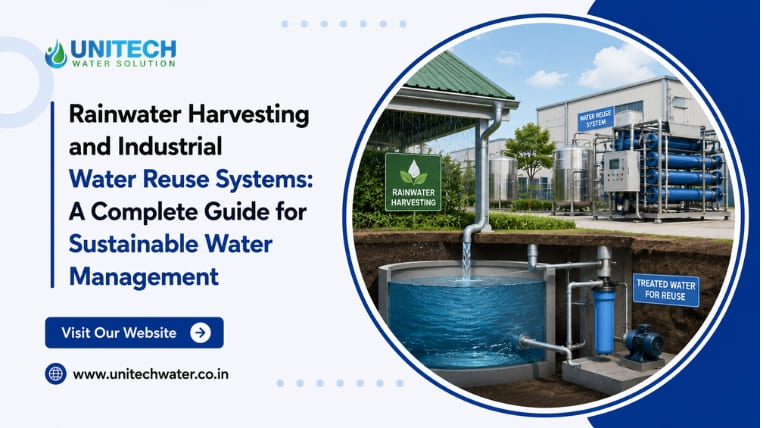
This is where rainwater harvesting and industrial water reuse systems play a crucial role. Rainwater harvesting helps industries collect and store rainwater for future use, while advanced Water Treatment Systems recycle wastewater, allowing it to be reused safely in industrial processes. Together, these solutions reduce freshwater consumption, lower operating costs, support environmental sustainability, and ensure long-term water security.
Modern Industrial Water Treatment technologies, including Industrial RO Plant, Filtration System, Ultra Filtration Plant, and Sewage Treatment Plant, make it possible for industries to recover and reuse large volumes of water without compromising quality or operational efficiency.
In this comprehensive guide, we'll explore how rainwater harvesting and industrial water reuse systems work, their benefits, applications, and why they have become essential investments for businesses seeking sustainable growth.
Why Rainwater Harvesting Is Important for Industries
Industries today face increasing pressure to optimize water usage while meeting environmental regulations and sustainability goals. Implementing rainwater harvesting is no longer just an environmentally responsible choice—it is a strategic business investment.
By collecting and utilizing rainwater, industries can reduce their dependence on groundwater and municipal water supplies while improving operational resilience during periods of water shortages.
Growing Water Scarcity in India
India is among the countries experiencing severe water stress due to rapid urbanization, industrial expansion, and climate change. Many industrial zones regularly face water shortages, forcing businesses to depend on expensive tanker water or restrict production.
Industries that invest in rainwater harvesting systems create an alternative water source that helps ensure uninterrupted operations even during periods of low rainfall or water restrictions.
Rising Water Costs
The cost of industrial water continues to increase because of:
- Increasing demand
- Limited freshwater availability
- Higher treatment costs
- Government regulations
- Transportation expenses
Rainwater harvesting significantly reduces dependence on purchased water, helping industries lower long-term operational costs.
When combined with advanced Water Treatment Systems, harvested rainwater can be treated and reused for multiple industrial applications.
Environmental Sustainability
Sustainable water management has become an important part of corporate environmental responsibility.
Rainwater harvesting helps industries:
- Reduce groundwater extraction
- Recharge underground aquifers
- Minimize stormwater runoff
- Reduce soil erosion
- Improve local water availability
- Support green manufacturing initiatives
Companies adopting sustainable water practices also strengthen their environmental reputation among customers, investors, and regulatory authorities.
Regulatory Compliance
Many state governments and industrial authorities encourage or mandate rainwater harvesting for commercial and industrial buildings.
Installing rainwater harvesting and Industrial Water Treatment systems helps businesses comply with environmental regulations while demonstrating their commitment to responsible water management.
What Is Rainwater Harvesting?
Rainwater harvesting is the process of collecting, filtering, storing, and utilizing rainwater for future use instead of allowing it to flow away as surface runoff.
A properly designed rainwater harvesting system captures rainwater from rooftops, paved areas, or open spaces and stores it for industrial applications or groundwater recharge.
Instead of relying solely on freshwater sources, industries can utilize harvested rainwater for:
- Industrial processing
- Equipment cleaning
- Cooling systems
- Boiler feed water (after treatment)
- Gardening and landscaping
- Toilet flushing
- Firefighting reserves
- Utility applications
When integrated with Water Purification Systems, harvested rainwater can also be treated for applications requiring higher water quality.
How Does Rainwater Harvesting Work?
The rainwater harvesting process involves several simple but effective stages.
Step 1: Rainwater Collection
Rainwater is collected from rooftops, factory sheds, warehouses, parking areas, or specially designed catchment surfaces.
The larger the catchment area, the greater the volume of rainwater that can be harvested during the monsoon season.
Step 2: Initial Filtration
Before entering storage tanks, rainwater passes through filters that remove:
- Leaves
- Dust
- Sand
- Debris
- Organic matter
A high-quality Filtration System improves water quality and protects downstream treatment equipment.
Step 3: Storage
Filtered rainwater is stored in underground or overhead tanks designed to prevent contamination and evaporation.
Storage capacity depends on:
- Annual rainfall
- Catchment area
- Daily water demand
- Available installation space
Properly designed storage systems ensure water availability throughout the year.
Step 4: Water Treatment
Stored rainwater is treated according to its intended use.
Depending on water quality requirements, treatment may include:
- Sand filtration
- Activated carbon filtration
- Ultra Filtration Plant
- UV disinfection
- Reverse osmosis through an Industrial RO Plant
These treatment processes ensure the harvested water meets the required quality standards for industrial use.
Step 5: Distribution and Reuse
After treatment, the purified water is distributed to various industrial processes, significantly reducing dependence on external water sources.
Key Components of a Rainwater Harvesting System
A successful rainwater harvesting system consists of several interconnected components that work together to collect, store, and treat rainwater efficiently.
Catchment Area
The catchment area is the surface where rainwater is collected.
Common examples include:
- Factory rooftops
- Warehouse roofs
- Industrial sheds
- Parking areas
- Concrete pavements
Larger catchment areas increase rainwater collection potential.
Gutters and Downpipes
These channels transport rainwater from rooftops to the filtration system.
Proper installation ensures minimal water loss during heavy rainfall.
First Flush Diverter
The first rainfall usually contains dust, bird droppings, leaves, and other contaminants accumulated on the roof.
A first flush diverter automatically diverts this initial runoff, ensuring cleaner water enters the storage system.
Filtration Unit
The filtration unit removes suspended particles before water enters storage tanks.
Typical filtration media include:
- Gravel
- Sand
- Activated carbon
- Mesh screens
A properly designed Filtration System improves overall water quality and protects downstream treatment equipment.
Storage Tank
Storage tanks preserve harvested rainwater until it is required.
Industrial storage tanks are typically constructed using:
- RCC
- HDPE
- Stainless Steel
- FRP
Tank size depends on expected rainfall and industrial water demand.
Treatment System
Depending on the application, stored rainwater may require advanced treatment using:
- Industrial RO Plant
- Ultra Filtration Plant
- UV sterilization
- Chemical disinfection
These systems help produce water suitable for various industrial applications.
Types of Rainwater Harvesting Systems
Different industries require different rainwater harvesting solutions based on their water demand, available land, and rainfall patterns.
Rooftop Rainwater Harvesting
This is the most widely used method in commercial and industrial facilities.
Rainwater collected from rooftops is filtered and stored for future use.
Advantages
- Easy installation
- Cost-effective
- Low maintenance
- Suitable for factories and warehouses
Surface Runoff Harvesting
In this method, rainwater flowing across roads, parking areas, and open land is collected and directed toward storage tanks or treatment facilities.
It is particularly useful for industries with large open campuses.
Recharge Pit System
Recharge pits allow rainwater to seep into the ground, helping replenish groundwater levels.
Benefits include:
- Improved groundwater recharge
- Reduced flooding
- Long-term water conservation
Recharge Well System
Recharge wells direct filtered rainwater into deeper underground aquifers.
This system is ideal for industries located in regions experiencing declining groundwater levels.
Storage-Based Rainwater Harvesting
Instead of recharging groundwater, this system stores harvested rainwater in tanks for direct industrial use after appropriate treatment.
When combined with modern Water Purification Systems, stored rainwater becomes a dependable alternative water source throughout the year.
What Are Industrial Water Reuse Systems?
While rainwater harvesting focuses on collecting natural rainfall, industrial water reuse systems are designed to recover, treat, and recycle wastewater generated during industrial operations.
Rather than discharging used water, industries can process it through advanced Water Treatment Plant technologies and reuse it for various non-potable or process applications.
A typical industrial water reuse system may include:
- Equalization tanks
- Primary filtration
- Biological treatment (where required)
- Filtration System
- Industrial RO Plant
- Ultra Filtration Plant
- Disinfection units
- Storage tanks
By integrating water reuse with rainwater harvesting, businesses can create a sustainable water management strategy that significantly reduces freshwater consumption while supporting environmental compliance and operational efficiency.
Industrial Water Reuse Process: Step-by-Step
An effective industrial water reuse system follows a systematic treatment process that transforms wastewater into reusable water for various industrial applications. By integrating advanced Water Treatment Systems, industries can significantly reduce freshwater consumption while improving operational efficiency.
Below is the typical process followed by most industrial water reuse systems.
Step 1: Wastewater Collection
The first step involves collecting wastewater generated from various industrial activities such as:
- Production processes
- Equipment cleaning
- Cooling towers
- Boiler blowdown
- Process water discharge
- Utility operations
Instead of discharging this water, it is directed to a centralized treatment system for further processing.
Step 2: Primary Screening and Pretreatment
Large suspended solids, debris, oils, grease, and sediments are removed during pretreatment.
This stage generally includes:
- Bar Screens
- Oil & Grease Traps
- Sedimentation Tanks
- Equalization Tanks
Proper pretreatment protects downstream equipment and improves the efficiency of the complete Water Treatment Plant.
Step 3: Primary Filtration
After pretreatment, the water passes through a Filtration System that removes smaller suspended particles.
Common filtration methods include:
- Pressure Sand Filters
- Activated Carbon Filters
- Multimedia Filters
- Cartridge Filters
These systems improve water clarity and reduce the load on advanced treatment equipment.
Step 4: Advanced Water Treatment
Depending on the quality requirements, advanced purification technologies are used.
These may include:
- Industrial RO Plant
- Ultra Filtration Plant
- UV Sterilization
- Ozonation
- Chemical Treatment
An Industrial RO Plant removes dissolved salts, heavy metals, bacteria, viruses, and dissolved impurities, producing high-quality water suitable for industrial reuse.
Step 5: Storage and Distribution
Once treated, the purified water is stored in dedicated storage tanks before being supplied for reuse.
Typical reuse applications include:
- Cooling towers
- Boiler feed water
- Process water
- Equipment washing
- Utility water
- Gardening
- Toilet flushing
This closed-loop approach minimizes freshwater demand while improving water resource efficiency.
Industrial Water Reuse Process Flow
|
Stage |
Process |
Purpose |
|
1 |
Wastewater Collection |
Collect used industrial water |
|
2 |
Pretreatment |
Remove large contaminants |
|
3 |
Filtration |
Remove suspended solids |
|
4 |
Advanced Treatment |
Purify water using RO, UF, UV, etc. |
|
5 |
Storage |
Store treated water |
|
6 |
Reuse |
Supply water for industrial operations |
Benefits of Rainwater Harvesting and Industrial Water Reuse Systems
Implementing rainwater harvesting together with Industrial Water Treatment technologies offers substantial environmental, operational, and financial advantages.
Reduces Freshwater Consumption
One of the biggest advantages is reducing dependence on groundwater and municipal water supplies.
Industries can reuse treated water for:
- Cooling systems
- Process applications
- Cleaning
- Landscaping
- Utility services
This helps conserve valuable freshwater resources for future generations.
Lowers Operational Costs
Water procurement, transportation, and treatment costs continue to rise across India.
By harvesting rainwater and recycling wastewater, industries can significantly reduce:
- Water purchase costs
- Groundwater extraction expenses
- Tanker water dependency
- Wastewater disposal charges
Although the initial investment may be higher, long-term savings often provide an excellent return on investment.
Improves Water Security
Industries relying on a single water source are vulnerable during periods of drought or municipal water shortages.
Rainwater harvesting provides an additional water source that supports uninterrupted production even during water scarcity.
Supports Sustainable Manufacturing
Businesses worldwide are adopting environmentally responsible manufacturing practices.
Rainwater harvesting contributes to:
- Green manufacturing
- Water conservation
- ESG initiatives
- Sustainable development goals
- Reduced environmental impact
Companies implementing sustainable practices also enhance their corporate reputation.
Reduces Wastewater Discharge
Instead of discharging treated water into the environment, industries can reuse it internally.
Benefits include:
- Lower pollution
- Reduced environmental impact
- Lower discharge costs
- Better compliance with environmental regulations
Increases Plant Efficiency
Modern Water Treatment Systems improve water availability, ensuring production continues without interruption.
Reliable water availability also enhances:
- Equipment performance
- Production consistency
- Process stability
Environmental and Business Benefits at a Glance
|
Environmental Benefits |
Business Benefits |
|
Conserves freshwater resources |
Lower operating costs |
|
Reduces groundwater extraction |
Reduced water bills |
|
Minimizes wastewater discharge |
Better return on investment |
|
Supports groundwater recharge |
Reduced production downtime |
|
Lowers environmental impact |
Improved operational efficiency |
|
Encourages sustainable development |
Enhanced brand reputation |
Industries That Benefit Most from Rainwater Harvesting and Water Reuse
Almost every industry that consumes significant quantities of water can benefit from implementing sustainable water management systems.
Food Processing Industry
Food manufacturing requires high-quality water for:
- Washing
- Cleaning
- Processing
- Utility operations
Rainwater harvesting reduces dependence on freshwater while maintaining operational efficiency.
Beverage Manufacturing
Beverage companies consume large volumes of water during production.
Industrial water reuse systems help reduce overall water consumption while maintaining production continuity.
Pharmaceutical Industry
Pharmaceutical manufacturing requires highly purified water for production processes.
Advanced Industrial RO Plant solutions combined with rainwater harvesting provide a reliable and sustainable water source.
Hotels and Resorts
Hotels require water for:
- Guest rooms
- Kitchens
- Laundry
- Landscaping
- Cooling systems
Rainwater harvesting significantly reduces municipal water consumption.
Hospitals and Healthcare Facilities
Healthcare facilities use purified water for sanitation, laboratories, and specialized medical equipment.
Combining rainwater harvesting with modern Water Purification Systems helps improve water availability while supporting sustainable healthcare operations.
Textile Industry
Textile processing consumes large quantities of water for:
- Dyeing
- Washing
- Finishing
Water reuse systems reduce freshwater demand while lowering wastewater discharge.
Dairy Industry
Dairy processing plants require clean water for:
- Equipment cleaning
- Processing
- Boiler operations
Industrial water reuse improves operational efficiency while reducing water procurement costs.
Commercial Buildings
Large commercial buildings utilize water for:
- HVAC systems
- Landscaping
- Restrooms
- Cleaning
Rainwater harvesting reduces overall utility expenses.
Educational Institutions
Schools, colleges, and universities can use harvested rainwater for:
- Gardening
- Toilet flushing
- Campus maintenance
- Groundwater recharge
This promotes sustainability while reducing water costs.
Role of Industrial RO Plants in Water Reuse
An Industrial RO Plant plays a vital role in converting harvested rainwater and treated wastewater into high-quality reusable water.
Reverse osmosis technology effectively removes:
- Dissolved salts
- Heavy metals
- Bacteria
- Viruses
- Organic contaminants
- Excess minerals
This makes treated water suitable for a wide range of industrial applications.
Advantages of Using Industrial RO Plants
- Produces high-quality purified water
- Improves process efficiency
- Reduces freshwater dependence
- Extends equipment life
- Lowers maintenance costs
- Supports sustainable water reuse
Industries requiring high-purity water often integrate Industrial RO Plants into their overall Water Treatment Systems for maximum efficiency.
Importance of Filtration and Pretreatment
Pretreatment is one of the most critical stages in both rainwater harvesting and industrial water reuse.
Without proper pretreatment, contaminants can damage downstream treatment equipment and reduce the efficiency of the entire Water Treatment Plant.
Water Softening Plant
A Water Softening Plant removes hardness-causing minerals such as calcium and magnesium before water enters advanced treatment systems.
Benefits include:
- Reduced scaling
- Longer membrane life
- Improved RO performance
- Lower maintenance costs
Filtration System
A high-quality Filtration System removes suspended solids, sediments, and organic particles before advanced purification.
Benefits include:
- Improved water clarity
- Reduced membrane fouling
- Better treatment efficiency
- Longer equipment life
Ultra Filtration Plant
An Ultra Filtration Plant removes microorganisms, colloidal particles, and fine suspended solids before reverse osmosis.
Advantages include:
- Better water quality
- Reduced membrane fouling
- Lower cleaning frequency
- Improved RO system performance
Cartridge Filters
Cartridge filters provide the final level of particulate filtration before water enters the RO membranes.
Replacing Cartridge Filters on schedule helps maintain system efficiency while protecting expensive membrane elements.
By combining effective pretreatment with advanced Water Treatment Systems, industries can maximize water recovery, extend equipment life, and ensure consistent water quality for long-term sustainable operations.
Rainwater Harvesting vs Groundwater Extraction
Many industries still rely heavily on groundwater to meet their daily operational needs. However, excessive groundwater extraction is becoming increasingly unsustainable due to declining water tables, stricter environmental regulations, and rising pumping costs. Rainwater harvesting offers a more sustainable and long-term alternative by capturing naturally available rainfall and reducing dependence on underground water resources.
The comparison below highlights the key differences between the two approaches.
|
Parameter |
Rainwater Harvesting |
Groundwater Extraction |
|
Water Source |
Rainfall |
Underground aquifers |
|
Sustainability |
Highly sustainable |
Limited natural resource |
|
Environmental Impact |
Positive |
Can deplete groundwater levels |
|
Initial Investment |
Moderate |
Moderate |
|
Long-Term Operating Cost |
Low |
Higher due to pumping and maintenance |
|
Water Availability |
Seasonal (with storage) |
Depends on groundwater levels |
|
Water Quality |
Requires treatment before use |
May require extensive treatment depending on source |
|
Regulatory Compliance |
Encouraged by government |
Increasingly regulated in many states |
For industries aiming to reduce operational costs while improving environmental performance, integrating rainwater harvesting with Water Treatment Systems offers a practical and future-ready solution.
Government Regulations and Sustainability Goals
Water conservation has become a national priority in India. Various government departments and environmental agencies encourage industries to adopt rainwater harvesting and wastewater reuse systems to reduce freshwater consumption and promote responsible water management.
Implementing these systems not only helps businesses comply with regulations but also strengthens their environmental credentials.
Key Government Initiatives Supporting Water Conservation
- Promotion of rainwater harvesting in industrial and commercial buildings
- Groundwater conservation initiatives
- Industrial wastewater recycling guidelines
- Water conservation programs under the Jal Shakti Mission
- Pollution control measures issued by State Pollution Control Boards
- Sustainable manufacturing and environmental compliance initiatives
Industries adopting rainwater harvesting and Industrial Water Treatment solutions are better prepared to meet future environmental standards while reducing operational risks associated with water shortages.
How to Choose the Right Water Treatment System for Water Reuse
Selecting the right Water Treatment Plant depends on several factors, including water quality, daily water demand, industrial application, and future expansion plans. Every business has unique requirements, so investing in a customized solution is essential for long-term performance.
Before choosing a system, evaluate the following factors.
Water Source
Identify the primary source of water:
- Rainwater
- Groundwater
- Surface water
- Industrial wastewater
- Municipal supply
Each source has different treatment requirements and influences the design of the overall Water Treatment System.
Daily Water Requirement
Estimate the amount of water required for daily operations.
This helps determine:
- Plant capacity
- Storage tank size
- Pump selection
- Treatment equipment sizing
Planning for future expansion at this stage can help avoid costly upgrades later.
Water Quality Analysis
A detailed water analysis should include:
- Total Dissolved Solids (TDS)
- Hardness
- Turbidity
- Iron content
- Chloride levels
- Microbiological contamination
- pH
These parameters determine whether the system requires a Filtration System, Water Softening Plant, Ultra Filtration Plant, or an Industrial RO Plant.
Industrial Application
Different industries require different water quality standards.
For example:
- Pharmaceutical companies require high-purity water.
- Food and beverage industries require hygienic processing water.
- Hotels and hospitals require safe and reliable water for daily operations.
- Manufacturing industries often require treated water for cooling, boilers, and production processes.
Choosing the right treatment technology ensures optimal performance and regulatory compliance.
Future Maintenance and Service Support
When investing in a water treatment solution, consider the long-term availability of:
- Genuine spare parts
- Technical support
- Preventive maintenance
- Annual Maintenance Contracts (AMC)
- Operator training
Reliable after-sales service helps maximize the lifespan of your equipment and reduces operational downtime.
Why Choose Unitech Water Solutions?
Implementing an efficient rainwater harvesting and industrial water reuse system requires expertise, quality equipment, and dependable technical support. With over two decades of experience, Unitech Water Solutions provides customized solutions that help industries optimize water usage while reducing operational costs.
Our Expertise Includes
- Industrial RO Plants
- Water Treatment Plants
- Water Purification Systems
- Filtration Systems
- Water Softening Plants
- Ultra Filtration Plants
- Sewage Treatment Plants
- Turnkey Water Treatment Projects
- Installation and Commissioning
- Annual Maintenance Services
- Genuine RO Spares and Components
Why Businesses Trust Us
- Established in 2004
- ISO-certified manufacturing standards
- Customized solutions for multiple industries
- High-quality components and advanced technology
- End-to-end turnkey project execution
- PAN India installation and service support
- Experienced technical team
- Reliable after-sales assistance
Whether you're planning a new industrial facility or upgrading an existing one, our team helps you design the most efficient Water Treatment System based on your water source, industry requirements, and sustainability goals.
Build Sustainable Water Solutions with Unitech Water Solutions
At Unitech Water Solutions, we specialize in designing, manufacturing, and installing customized Water Treatment Systems that help businesses optimize water usage and achieve sustainable growth. From Industrial RO Plants and Filtration Systems to complete turnkey water treatment projects, we deliver reliable solutions tailored to your industry's unique requirements.
Contact Unitech Water Solutions today to discuss your water management needs and discover how our advanced treatment technologies can help your business conserve water, reduce costs, and build a more sustainable future.