



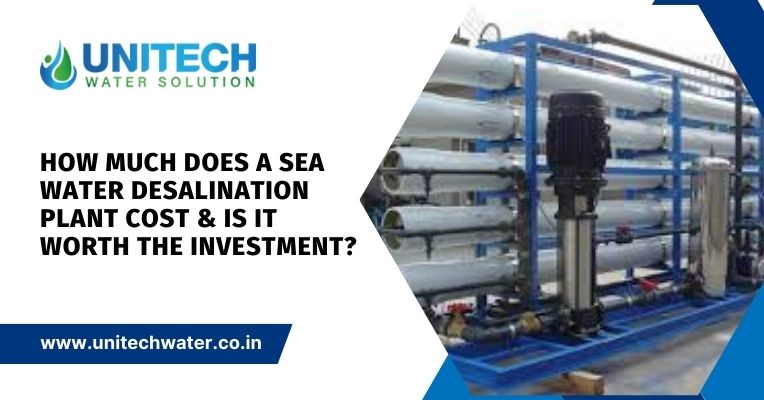
Water scarcity is becoming a serious concern across the world. Industries, commercial sectors, coastal regions, and remote areas are facing major challenges in accessing clean and fresh water. One of the most reliable solutions that has emerged globally is the Sea Water Desalination Plant. This modern water purification technology allows us to convert saline seawater into pure, usable water suitable for drinking, industrial use, irrigation, and more.
In this blog, we will explore how a sea water desalination plant works, its benefits, advantages, components, and why industries today increasingly depend on desalination systems.
What is a Sea Water Desalination Plant?
A Sea Water Desalination Plant is an advanced water purification system designed to remove salt, minerals, and impurities from seawater, producing fresh and drinkable water. Since oceans cover more than 70% of Earth’s surface, desalination helps utilize an abundant resource and solve water shortages effectively.
These plants are commonly installed in:
- Coastal cities
- Marine industries
- Oil & gas offshore operations
- Tourism resorts
- Power plants
- Remote islands and defense bases
Why Desalination Is Important Today?
Fresh drinking water sources are decreasing due to:
- Rapid industrialization
- Population growth
- Pollution of rivers and lakes
- Over-extraction of groundwater
Desalination provides an eco-friendly and continuous source of water, especially in places where fresh water is unavailable naturally.
How Does the Sea Water Desalination Plant Work?
Most desalination plants use Reverse Osmosis (RO) Technology. The process involves pushing seawater at high pressure through a semi-permeable membrane to separate salt and impurities.
Step-By-Step Desalination Process
Intake of Seawater – Seawater is pumped directly from the ocean or sea.
Pre-Treatment Filtration – Sand filters, activated carbon, and chemical dosing remove suspended particles.
Reverse Osmosis (RO) System – The water is passed through RO membranes, separating salt and minerals.
Post-Treatment & Mineral Adjustment – Treated water is remineralized for safe use.
Storage & Supply – Fresh water is stored in tanks and supplied for drinking, industry, or distribution.
Types of Desalination Systems
Different industries and locations use various desalination systems depending on water requirement and budget.
Industrial Seawater Desalination System
An Industrial Seawater Desalination System is designed for high water output. It is used by:
- Manufacturing factories
- Mining sites
- Chemical industries
- Power generation plants
These systems operate continuously and provide thousands of liters of water per hour.
Seawater Treatment Plant
A Seawater Treatment Plant focuses on purification for general industrial and commercial use, rather than for drinking. This water is ideal for:
- Cooling towers
- Boiler feed water
- Construction and cleaning uses
Marine Desalination System
A Marine Desalination System is installed on:
- Ships
- Marine vessels
- Offshore rigs
Designed to withstand saltwater climate, it is compact, energy-efficient, and easy to maintain at sea.
What Makes Desalination the Best Water Solution?
✔ Unlimited Water Source
Oceans offer a plentiful supply, ensuring water availability even during drought.
✔ Suitable for Drinking
With desalination technology for fresh water, seawater becomes safe and drinkable.
✔ Long-Term Sustainable Option
Once installed, a plant ensures consistent water production without disrupting natural water bodies.
✔ Reduces Dependency on Freshwater Supplies
Industries in coastal or island areas no longer depend on tankers or groundwater.
Desalination Technology for Fresh Water
Modern desalination technology for fresh water combines:
- Reverse Osmosis
- Pressure pumps
- Energy recovery devices
- Ultraviolet sterilization
- Advanced membranes
With these technologies, seawater becomes safe and clear for:
- Drinking water bottling
- School and hospital consumption
- Hotels and resorts
- Community water supply
Many developing nations are now installing desalination technology to support clean water availability for the public.
Sea Water to Drinking Water System – A Practical Solution
A major highlight of desalination is the Sea Water to Drinking Water System, which makes seawater completely potable. Through RO filtration, the water becomes:
- Free from harmful salts
- Safe for consumption
- Pure in taste and odor
- Healthy with added minerals
Many government bodies also use this method to support local water supply projects in coastal villages.
Applications of Sea Water Desalination Plants
- Coastal industrial zones
- Marine vessels and ports
- Shipping docks
- Beach resorts and hotels
- Power generating units
- Water-scarce island communities
- Offshore oil rigs
- Municipal water supply
Advantages of Installing a Sea Water Desalination Plant
Business & Industrial Benefits
|
Benefit |
Description |
|
Cost-effective in long run |
Saves water cost & reduces tanker dependency |
|
High output |
Produces large volumes for industry requirements |
|
Energy-efficient |
Latest technology consumes less power |
|
Improves business continuity |
Water supply never stops |
Environmental Benefits
- Reduces groundwater depletion
- Increases sustainable water availability
- Prevents overuse of lakes and reservoirs
Challenges & Considerations
Even though desalination is powerful, industries should consider:
- Initial setup investment
- Regular membrane cleaning & replacement
- Proper disposal of brine water
With the right professional installation and maintenance, these challenges can be managed easily.
Choosing the Right Desalination System – What to Look For
Before you purchase or install a plant, check:
- Required water output (LPH / m³ per day)
- RO membrane quality
- Warranty & AMC services
- Certification and material grade
- Cost of energy consumption
- Space availability
Conclusion
A Sea Water Desalination Plant is the future of water sustainability. Whether it is for industries, marine operations, hospitality, or public water supply, desalination is a pr actical, long-term, and reliable solution. With growing global water shortages, adopting this technology ensures that clean, fresh water remains available for generations.