


Introduction
Planning a packaged drinking water business? One decision can affect your project budget, installation timeline, and daily operations: should you buy a complete plant from one supplier or purchase each machine separately?
At first, buying individual machines may seem like a way to control spending. You can compare suppliers, select equipment, and purchase items according to your budget. However, you must also consider installation, machinery compatibility, electrical connections, and commissioning.
A turnkey mineral water plant offers a different approach. Instead of managing every purchase separately, you work with a supplier to arrange an integrated plant solution based on your production needs and agreed project scope.
Neither option suits every business. Your existing infrastructure, technical experience, production targets, and available budget all matter. Let's compare both approaches, explore their advantages, and understand which one may work better for your water plant project in India.
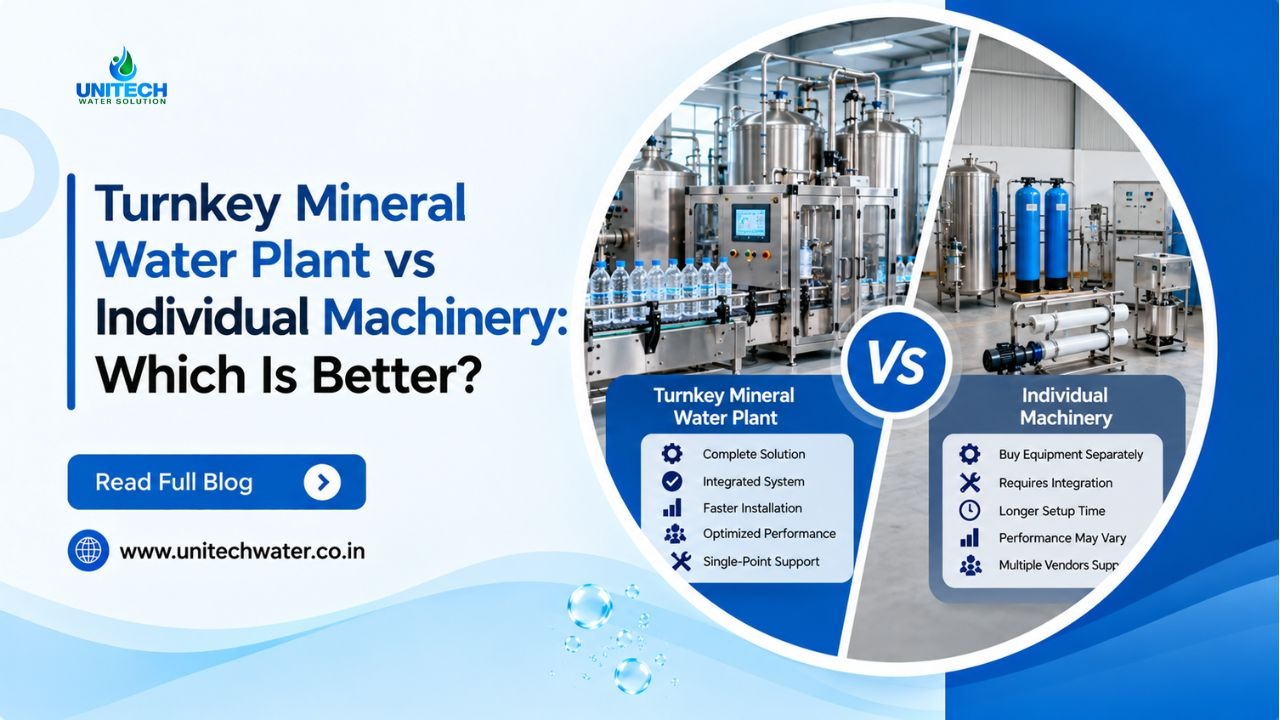
Turnkey vs Individual Machinery: Which Option Wins?
Before exploring the details, compare the main differences between these two purchasing approaches.
|
Comparison Factor |
Turnkey Mineral Water Plant |
Individual Machinery Purchase |
|
Initial quotation |
Usually covers an agreed equipment package and related services |
Each machine and service is quoted separately |
|
Overall project cost |
Easier to assess when the complete scope is defined |
Requires adding equipment, installation, and integration costs |
|
Procurement |
Coordinated through one main supplier |
Managed across multiple suppliers |
|
Machinery compatibility |
Equipment can be selected for an integrated process |
Buyer must verify compatibility between machines |
|
Installation |
Included if specified in the contract |
Arranged by the buyer or appointed contractors |
|
Commissioning |
Can be included in the agreed scope |
Must be coordinated with relevant suppliers |
|
Project management |
Fewer supplier relationships to manage |
More coordination and follow-up may be required |
|
After-sales service |
May be coordinated through one provider |
Support may come from several vendors |
|
Flexibility |
Depends on package design and contract terms |
Greater freedom to choose individual brands and models |
|
Best suited for |
New projects seeking an integrated solution |
Experienced buyers upgrading or expanding existing plants |
The key takeaway: A turnkey project focuses on integrating the complete system, while individual purchasing gives you more direct control over equipment selection. The better choice depends on the total project requirements, not just the first quotation.
What Is a Turnkey Mineral Water Plant?
A turnkey mineral water plant is an integrated project in which a supplier provides an agreed combination of machinery, system planning, and project services. Depending on the contract, the scope may include installation, commissioning, testing, and operator training.
For a packaged drinking water facility, the equipment package may include:
- Raw-water storage and pretreatment equipment
- Reverse osmosis (RO) treatment system
- Required filtration and disinfection equipment
- Treated-water storage tanks
- Bottle rinsing, filling, and capping machinery
- Electrical controls, pumps, and connecting systems
The exact equipment depends on the source-water quality, required treatment process, production capacity, and packaging format.
Advantages of Choosing a Turnkey Mineral Water Plant
1.One main point of contact
Instead of chasing several suppliers, you can coordinate the agreed project through one main provider. This can make it easier to resolve questions about equipment supply, installation, and commissioning.
2.Better coordination between machines
Water treatment and bottling involve connected stages. The output of one machine affects the next stage. Planning the equipment as a complete system helps the supplier account for flow rates, storage capacity, filling speed, and process requirements.
3.A clearer view of project costs
A detailed turnkey quotation can show equipment prices alongside installation, commissioning, and other included services. This makes budgeting easier, provided the supplier clearly lists exclusions and additional charges.
4.Less procurement work for the owner
You do not need to research and negotiate every equipment package separately. That can be particularly useful for first-time entrepreneurs who have limited experience with industrial water treatment projects.
5.Coordinated commissioning
When commissioning is included in the contract, the supplier can coordinate system checks and operating tests across the agreed equipment package. Ask which performance parameters will be tested before accepting the handover.
What Should You Check Before Choosing a Turnkey?
A turnkey package is not automatically a complete, ready-to-run facility. Some quotations cover machinery supply and installation but exclude civil work, electrical infrastructure, laboratory equipment, or packaging materials.
Before signing, confirm:
- Which machines and accessories are included
- Whether installation and commissioning are covered
- What production capacity the supplier is targeting
- Which site utilities and civil works you must arrange
- What warranty, spare-parts, and service terms apply
A clearly defined scope is what makes a turnkey arrangement useful.
What Does Buying Individual Machinery Mean?
Buying machinery individually means sourcing each part of your water plant separately. You might purchase the RO system from one manufacturer, storage tanks from another, and bottling equipment from a third supplier.
This approach lets you compare technical specifications and select equipment based on your priorities. However, the buyer or appointed project engineer must ensure that every machine works properly within the complete production line.
Advantages of Buying Individual Machinery
1.Greater freedom to select equipment
You can compare brands, specifications, and service arrangements for each machine. This can help when you have specific technical requirements or prefer a particular equipment manufacturer.
2.Flexible investment planning
You may be able to purchase machinery in stages, depending on the project design and installation plan. However, staged procurement must account for dependencies between equipment and the cost of completing the system later.
3.Better control over individual specifications
An experienced buyer can select components based on site conditions, production needs, and existing infrastructure rather than accepting a standard package.
4.Useful for plant upgrades
If your treatment system already works well but your filling line needs additional capacity, purchasing only the required equipment may be more practical than replacing the entire plant.
5.Direct relationships with manufacturers
You can contact individual vendors for technical specifications, spare parts, and equipment-specific support. The trade-off is that you may need to coordinate multiple service teams when a problem affects more than one machine.
Where Individual Purchasing Needs More Attention
The main challenge is integration. A high-capacity filling machine cannot compensate for insufficient treated-water output. Likewise, a treatment system with unsuitable controls or connections may require additional engineering before it can operate with the rest of the line.
To reduce these risks, prepare a complete process design before ordering equipment. Confirm flow rates, connection sizes, electrical requirements, control signals, storage needs, and installation responsibilities.
Real-World Examples: Which Approach Makes More Sense?
The right purchase method becomes clearer when you consider the type of project you are planning.
Example 1: A First-Time Entrepreneur Setting Up a New Plant
Suppose an entrepreneur plans to establish a packaged drinking water facility in Gujarat. They need a water treatment system, storage tanks, filling equipment, and supporting machinery but have limited experience coordinating industrial suppliers.
A turnkey package may be a practical choice because the entrepreneur can discuss the complete production requirement with one main supplier. The supplier can propose an equipment configuration, while the buyer confirms the site, budget, utilities, and required approvals.
Why it may work: The project has several connected systems, and the owner wants a coordinated installation process without managing every equipment interface independently.
Example 2: An Existing Plant Expanding Its Filling Capacity
Consider an established water plant that already has suitable treatment equipment but needs a faster bottling line to meet rising demand.
Buying individual machinery may make more sense. The owner can assess the existing RO output, treated-water storage, and bottling requirements before purchasing a compatible filling machine.
Why it may work: The business does not need to replace equipment that still meets its requirements. It can focus its investment on the specific production bottleneck.
Example 3: A Buyer Comparing Two Quotations
Imagine one supplier quotes a complete system, while another offers lower prices for separate machines.
The buyer should not compare only the equipment totals. They should add installation, interconnecting pipes, electrical work, transport, commissioning, and any required modifications to both estimates.
The lesson: Compare the cost of a complete, working installation - not simply the price of the machines listed on the quotation.
Why Consider Unitech Water Solution for Your Plant Project?
Choosing the right supplier involves more than comparing prices. You need a clear understanding of the proposed equipment, the treatment process, and the responsibilities involved in setting up your plant.
When evaluating Unitech Water Solution, discuss your project requirements in detail before deciding on a turnkey package or individual machinery.
Here are the points worth covering during your discussion:
1.Start with your water source and production target
Explain whether your source is borewell water, municipal water, or another supply. Share your expected production capacity and packaging requirements so the proposed equipment can be assessed against your needs.
2.Request a clearly defined machinery scope
Ask for the complete equipment list, technical specifications, and process flow. Confirm which treatment stages, storage systems, bottling machines, and accessories the proposal includes.
3.Compare the complete project cost
Request a breakdown of machinery, installation, commissioning, and other applicable charges. Check whether site preparation, electrical work, and additional equipment fall outside the quotation.
4.Confirm installation and commissioning responsibilities
Ask who will install the machinery, test the system, and train your operators, if training is included. Get the agreed responsibilities and handover conditions in writing.
5.Understand after-sales support
Discuss warranty coverage, spare-parts availability, maintenance requirements, and the process for requesting technical assistance. Confirm the actual service terms instead of relying on general assurances.
Explore the available water treatment solutions at Unitech Water Solution and request a proposal based on your plant capacity, water quality, and project scope.
Conclusion: Choose the Setup That Fits Your Business
The choice between a turnkey mineral water plant and individual machinery comes down to your project requirements, technical resources, and budget.
A turnkey approach can simplify procurement and coordinate connected equipment under a defined scope. Buying machines individually offers more freedom in equipment selection and can suit existing plants that need targeted upgrades. Both approaches require careful planning, compatible machinery, and a clear understanding of installation and service responsibilities.
Before making a decision, compare complete project costs, confirm the required production capacity, and check exactly what each supplier will deliver. The goal is not simply to buy machinery at the lowest price. It is to build a water plant that meets your production needs and can be maintained effectively over time.
Frequently Asked Questions
Not always. A turnkey mineral water plant may offer better overall value when coordinated equipment selection, installation, and commissioning are included. Individual machinery may have lower purchase prices, but additional engineering, installation, and integration costs can increase the final budget. Compare itemised quotations with the same equipment capacity and service scope before deciding.
The equipment depends on the water source, treatment needs, production capacity, and packaging requirements. A typical setup may include pretreatment filters, an RO system, disinfection equipment, storage tanks, pumps, and bottle-filling machinery. Some projects also require capping, labelling, and packaging equipment. Always check the equipment list because suppliers may define a complete package differently.
Start with the treatment capacity and required equipment. Then account for pretreatment, storage, filling and packaging machinery, installation, electrical work, civil preparation, commissioning, and applicable operating requirements. The final turnkey mineral water plant cost depends on the project scope and site conditions. Request an itemised quotation so you can identify inclusions, exclusions, and potential additional expenses.
Yes. You can source the RO system and bottling equipment from different manufacturers, provided the complete system is properly designed and integrated. Check treated-water output, storage capacity, filling speed, electrical controls, and connection requirements. Assign one qualified person or team to coordinate the equipment interfaces and commissioning responsibilities.
Ask about equipment specifications, treatment capacity, installation scope, commissioning tests, warranty terms, spare parts, and after-sales support. Also confirm the expected output under defined operating conditions and which site facilities you must provide. A reliable proposal should clearly state what the supplier will deliver and what remains your responsibility.
A turnkey setup may suit a first-time owner who wants coordinated equipment and a clearly defined project scope. Individual machinery may suit an experienced buyer with an engineering team and a clear integration plan. Before choosing, assess the source-water quality, required production capacity, available budget, site readiness, and service arrangements.
Yes, expansion may be possible if the existing design, utilities, and equipment support it. Before investing, assess whether the RO system, storage tanks, pumps, and bottling line can handle the planned increase. You may need additional machinery or system modifications. Discuss future capacity targets with the supplier during the initial design stage.